The routine has four different jobs
Traders often compress preparation, execution, journaling, and review into one vague instruction: "be disciplined." That is too much work for one moment. Each phase of the day has a different job, and the routine gets easier when the jobs stop competing with one another.
- Before the session: decideKnow the session, the setups you are willing to take, the risk you will accept, and whether you are fit to trade.
- During the session: execute and captureTrade the plan you already made and record the facts while context is still fresh.
- After the session: close the dayCheck completeness, note what happened, and separate process from the day's P/L.
- Later: review the sampleLook for repeated differences across setups, states, timing, and execution instead of turning one day into a story.
Before the market: decide what can be decided early
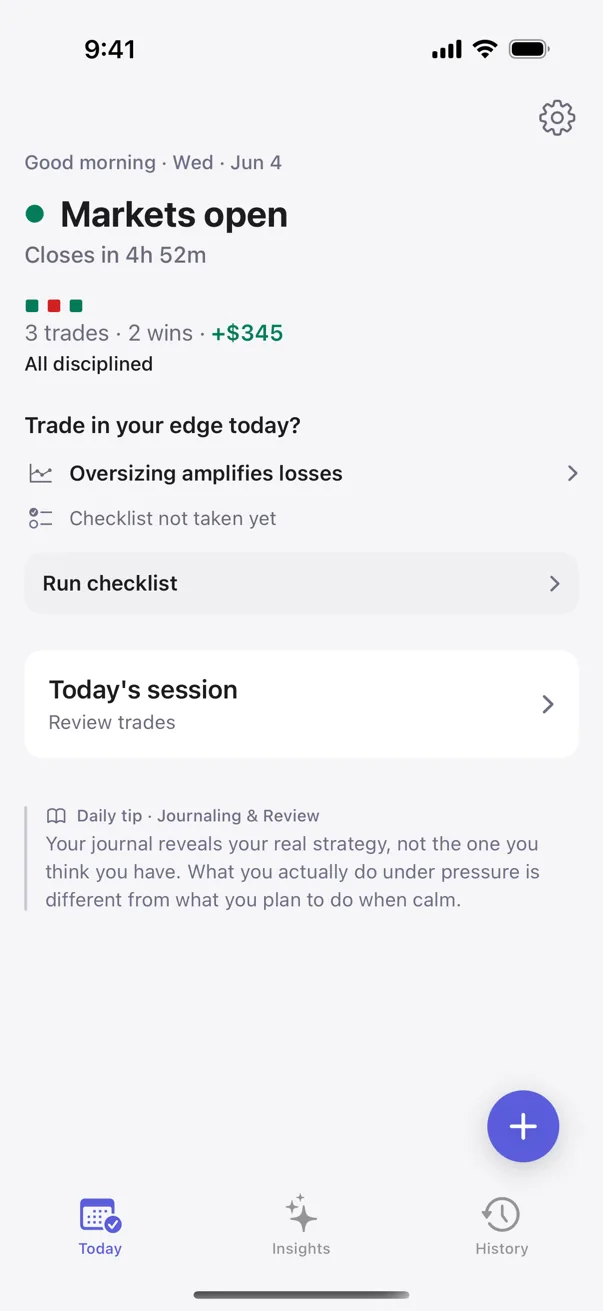
The open is a poor place to invent rules. Before the session, identify what kind of market window you are entering, which setups are in scope, what invalidates the trade, and how much risk belongs on it. Then make the less obvious check: are you in a state where you can follow those decisions?
The dedicated pre-market routine goes deeper on this phase. The short version is three questions:
- Where are we in the session? The open, regular hours, and extended hours create different conditions.
- What am I willing to trade? Named setups beat "whatever looks good" once the screen starts moving.
- Am I ready to execute the plan? State, risk, and constraints are easier to acknowledge before the first position is live.
This is where pre-commitment earns its keep. Implementation-intention research shows why specific "if this, then that" plans can improve follow-through: the response is attached to the situation before the situation arrives [1]. In trading terms, "if the setup is not on my plan, I pass" is more usable than "I will be disciplined today."
During the market: execute, then capture facts
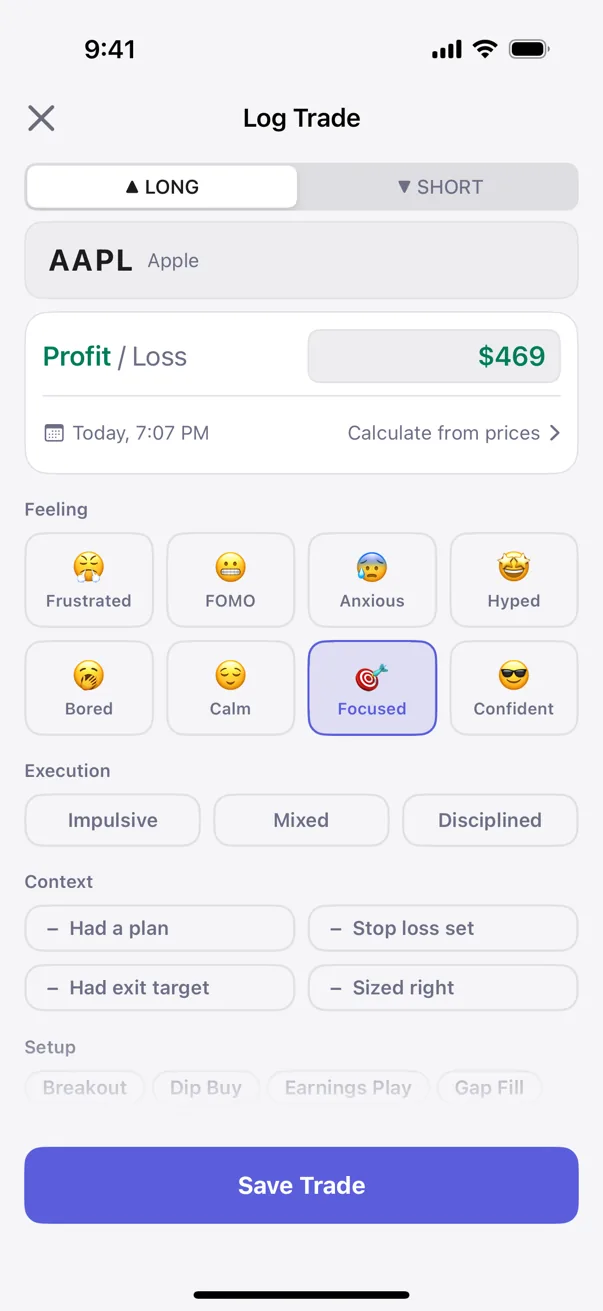
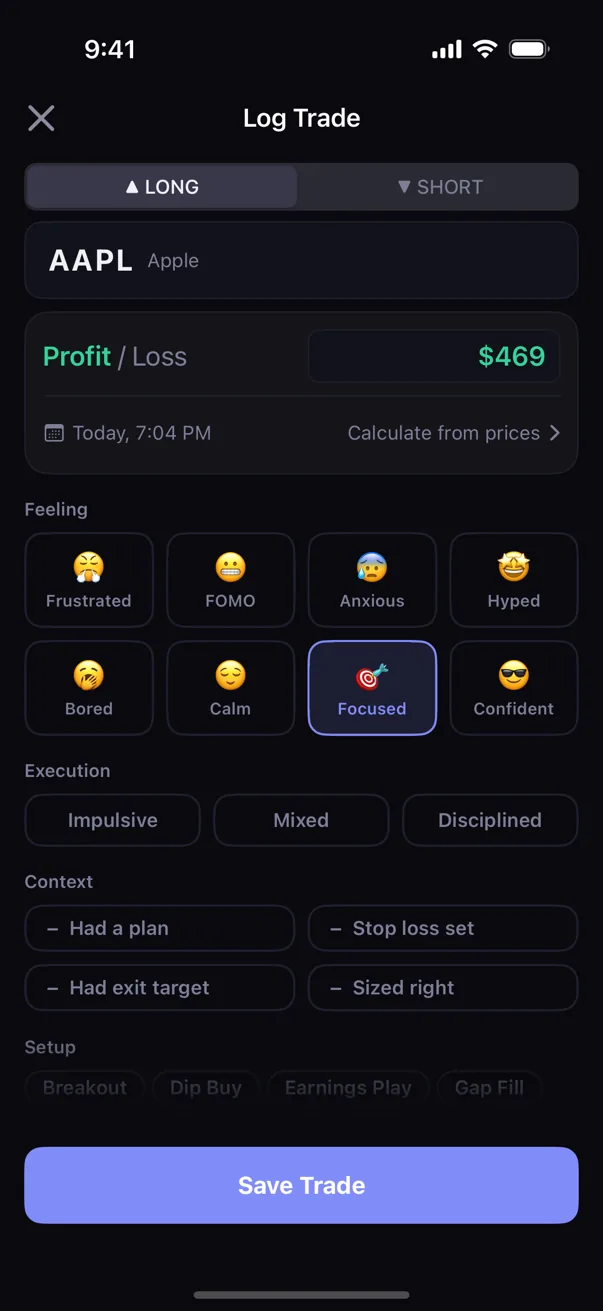
The session is not the time for a long journal entry. The useful record is compact: what you traded, how it ended, which setup or context applied, and the state you were actually in. The point is to preserve information that will be harder to reconstruct later.
This is also where the distinction between state and diagnosis matters. Record "frustrated" or "FOMO" if that is the state you can honestly identify. Do not force yourself to decide, while the trade is live, that you are "revenge trading" or that a loss proves a strategy is broken. Capture first. Interpretation comes later.
If the capture path is slow enough that you postpone it, simplify it. The journal has to survive the busiest version of your day, not only the quiet one.
After the market: close the day before you explain it
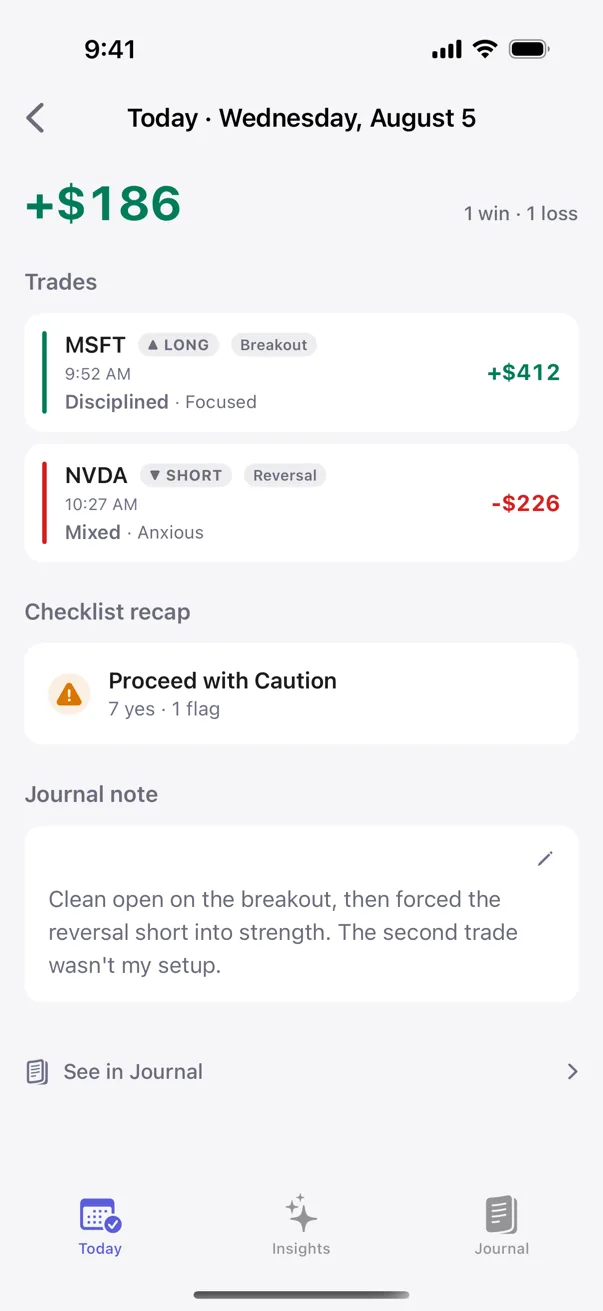
A session close has two jobs. First, make sure the record is complete. Second, capture the day-level context that would disappear by next week. Neither requires deciding whether you have discovered a new edge.
Start with process:
- Are all the day's trades present?
- Did you follow the setups and risk decisions you made before the session?
- Where did execution drift?
- Was there a moment worth remembering at the day level?
Only then look at the scoreboard. P/L is a fact about the day, but one profitable day can contain poor process and one losing day can contain clean execution. The routine should preserve that distinction.
Later: review patterns, not anecdotes
The final phase should not happen after every trade. Pattern review needs a sample. A single FOMO loss is a lesson to remember, not proof of a stable relationship. A single clean winner is not evidence that the setup is your edge.
Move the deeper questions to a regular trade review:
- Which setups are above or below your baseline?
- Does performance differ by state, time, or direction?
- Are planned trades and impulsive trades actually separating in your record?
- Is the apparent pattern backed by enough relevant trades to trust?
That separation keeps the daily routine light. The session produces records. The review turns records into questions. The evidence decides whether the question becomes a pattern.
The full routine in Kyra 1.6
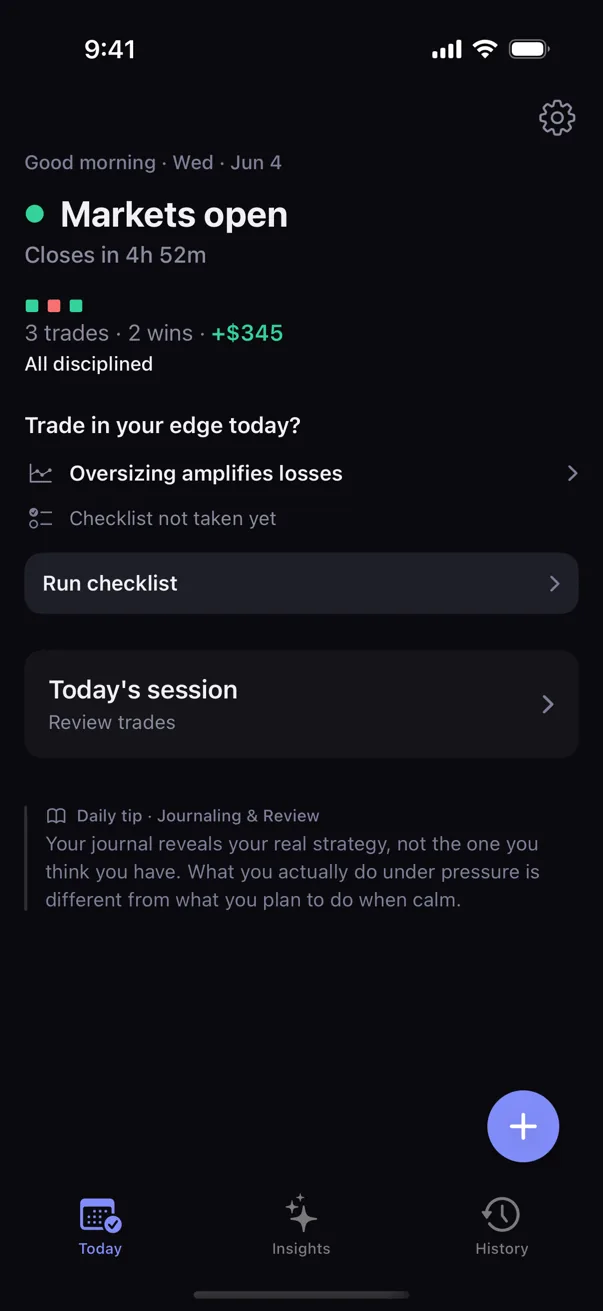
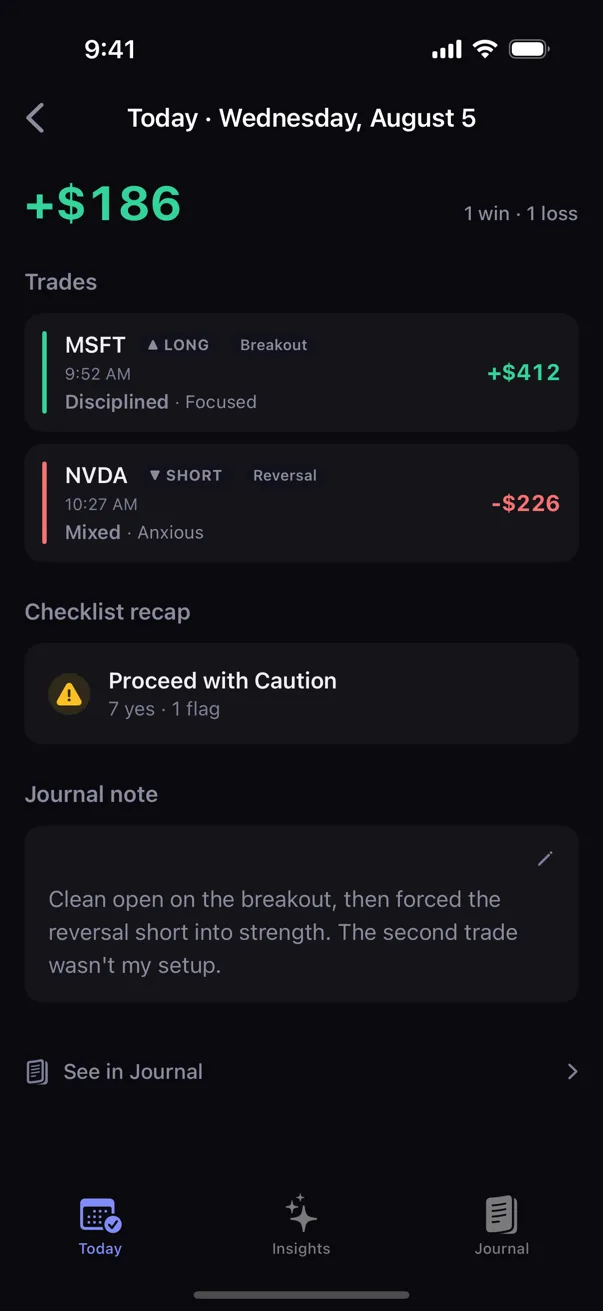
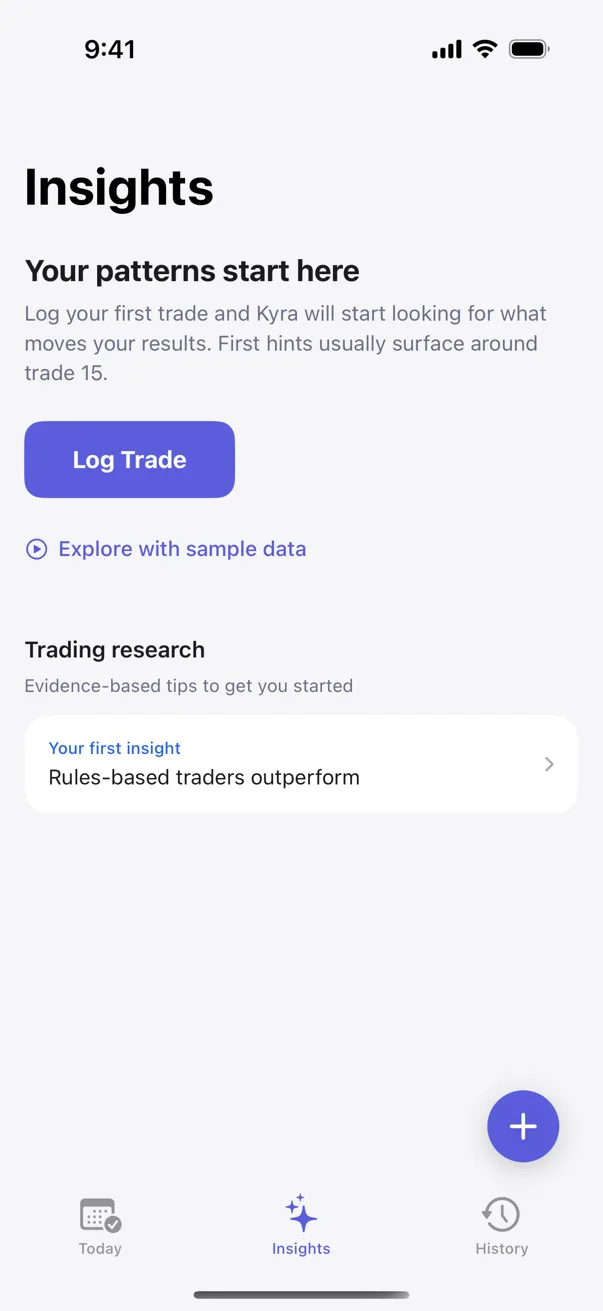
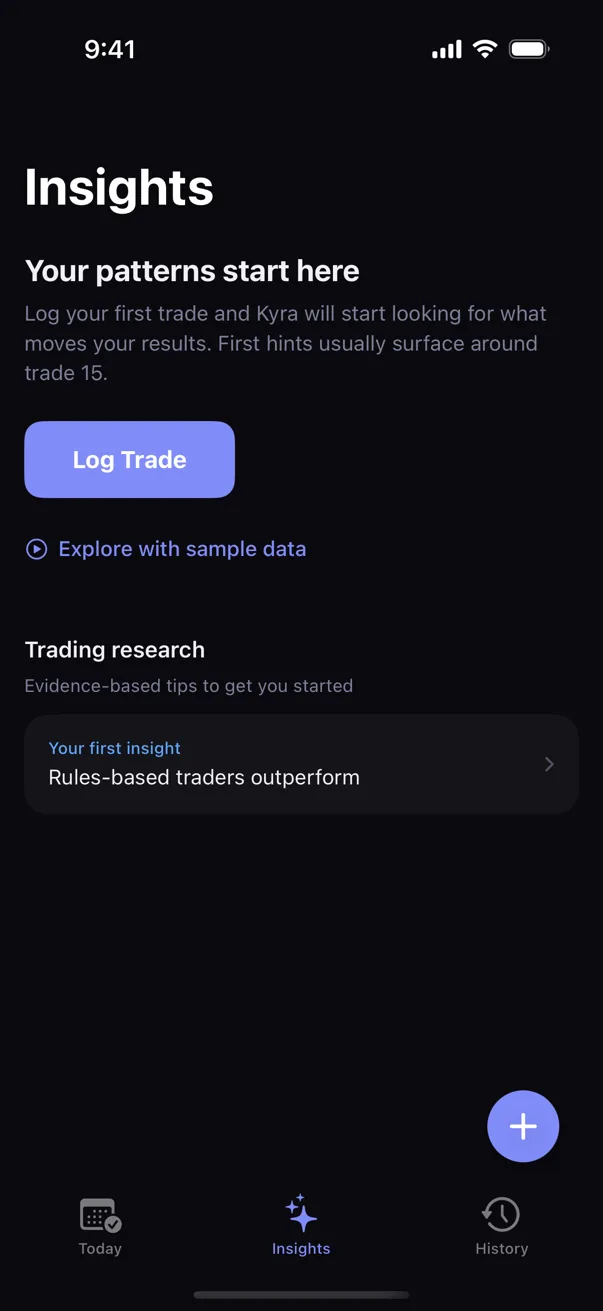
Kyra's released surfaces line up with the four phases without pretending to trade for you. Today shows market-session context, Readiness, and today's trades. Trade entry records the completed trade and context. Day Detail closes the day with its trades, checklist recap, and reflection. Journal and Insights are where the longer record becomes searchable and where detected patterns can be inspected.
Kyra does not block a trade because Readiness is poor, enforce a daily loss limit, or connect to a broker to execute orders. The routine is still yours. The app's job is to keep the decisions and the resulting evidence close enough that you can compare them later.
A routine you can copy
| Phase | Action | Question |
|---|---|---|
| Before | Set session, setup, risk, and readiness constraints | What have I already decided before pressure starts? |
| During | Execute the plan and capture the trade | What happened, and what context will I forget later? |
| After | Check completeness and close the day | Did my process match what I intended? |
| Weekly | Compare repeated behavior across the sample | What keeps happening often enough to measure? |
Keep the routine small enough that it survives normal life. A routine that requires perfect focus every day is not a routine; it is another plan that only works when conditions are easy.
Source
- Gollwitzer, P. M. (1999). Implementation intentions: Strong effects of simple plans. American Psychologist, 54(7), 493–503.
Educational only. Not financial or trading advice. A routine can structure preparation and review, but it cannot remove market risk or guarantee disciplined execution.